
Between early December 2025 and April 2026, Cinemateca Portuguesa – Museu do Cinema presents in Spain a travelling programme dedicated to Portuguese cinema, organised in collaboration with Filmoteca de València, Filmoteca de Andalucía, Filmoteca de Cantabria, Filmoteca de Navarra, and Filmoteca de Albacete. The program also benefits from the collaboration of Filmoteca Española, which contributed to the Spanish subtitling of several titles.
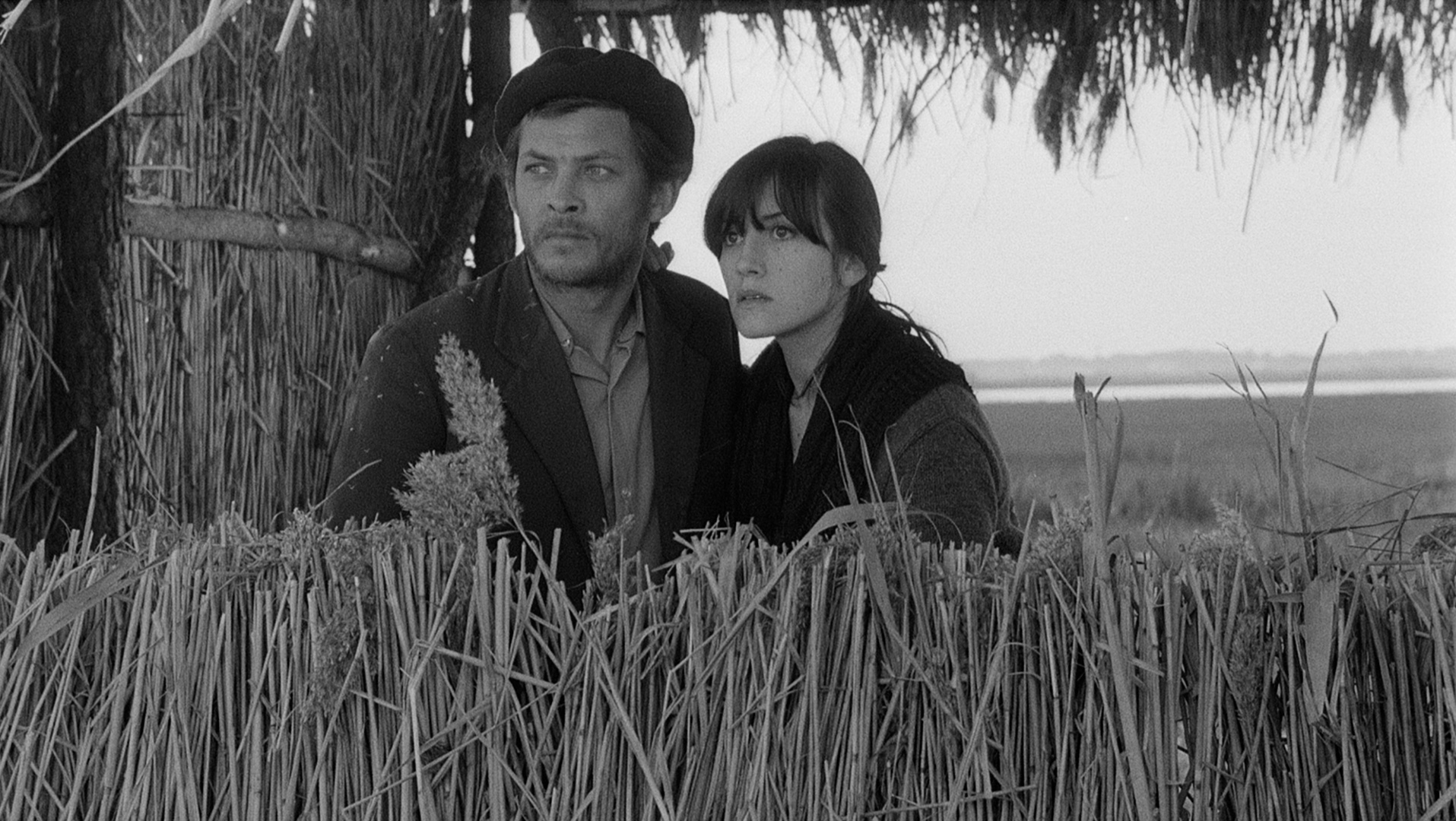
The programme travels through key works in the history of Portuguese cinema, spanning diverse genres, periods, and artistic perspectives. The journey begins with Fado, história d’uma cantadeira (Perdigão Queiroga, 1947), a popular musical melodrama centred on the legendary figure of Amália Rodrigues, which portrays post-war Lisbon and its atmosphere of longing and renewal. It continues with Mudar de Vida (Paulo Rocha, 1966), a landmark of the Portuguese New Cinema, set in the Ria de Aveiro and reflecting the tension between tradition and transformation.
The program then moves into the revolutionary period with As Armas e o Povo (Coletivo de Trabalhadores da Actividade Cinematográfica, 1974–75), a collective film documenting the spirit of the Carnation Revolution and the popular energy of Lisbon’s first May Day demonstrations, and Máscaras (Noémia Delgado, 1976), an outstanding record of the symbolic richness of the “caretos” and the popular rituals of Trás-os-Montes. Continuing this dialogue between politics, memory, and identity, Acto dos Feitos da Guiné (Fernando Matos Silva, 1980) revisits the Colonial War through a powerful reflection on its legacy and the wounds left by decolonisation.
From Manoel de Oliveira, Francisca (1981) evokes the 19th century and the literature of Agustina Bessa-Luís in one of his most intricate and beautiful explorations of love, destiny, and writing. From the same year, Silvestre (João César Monteiro, 1981) reinterprets Portuguese folk tales with irony and visual enchantment, marking the screen debut of Maria de Medeiros.
The program continues with O Sangue (Pedro Costa, 1989), the debut film by one of the central figures of contemporary Portuguese cinema, a haunting fable of initiation and loss. The cycle also includes Xavier (Manuel Mozos, 1992), a cult film from the early 1990s that captures, with tenderness and melancholy, the portrait of a youth searching for meaning in a Portugal redefining itself within Europe.
All films will be shown from newly digitised copies produced by Cinemateca Portuguesa as part of the Portuguese Cinema Digitisation Plan.
Resulting from a collaboration between Cinemateca Portuguesa and the Spanish film archives, this program strengthens the dialogue between institutions and the international circulation of Portuguese film heritage, fostering encounters between audiences and the rediscovery of a cinema that reflects the country’s history and collective imagination.