
Original Title
Rosa de Areia
Year
1989
Runtime (minutes)
88
Director
António Reis, Margarida Cordeiro
Synopsis
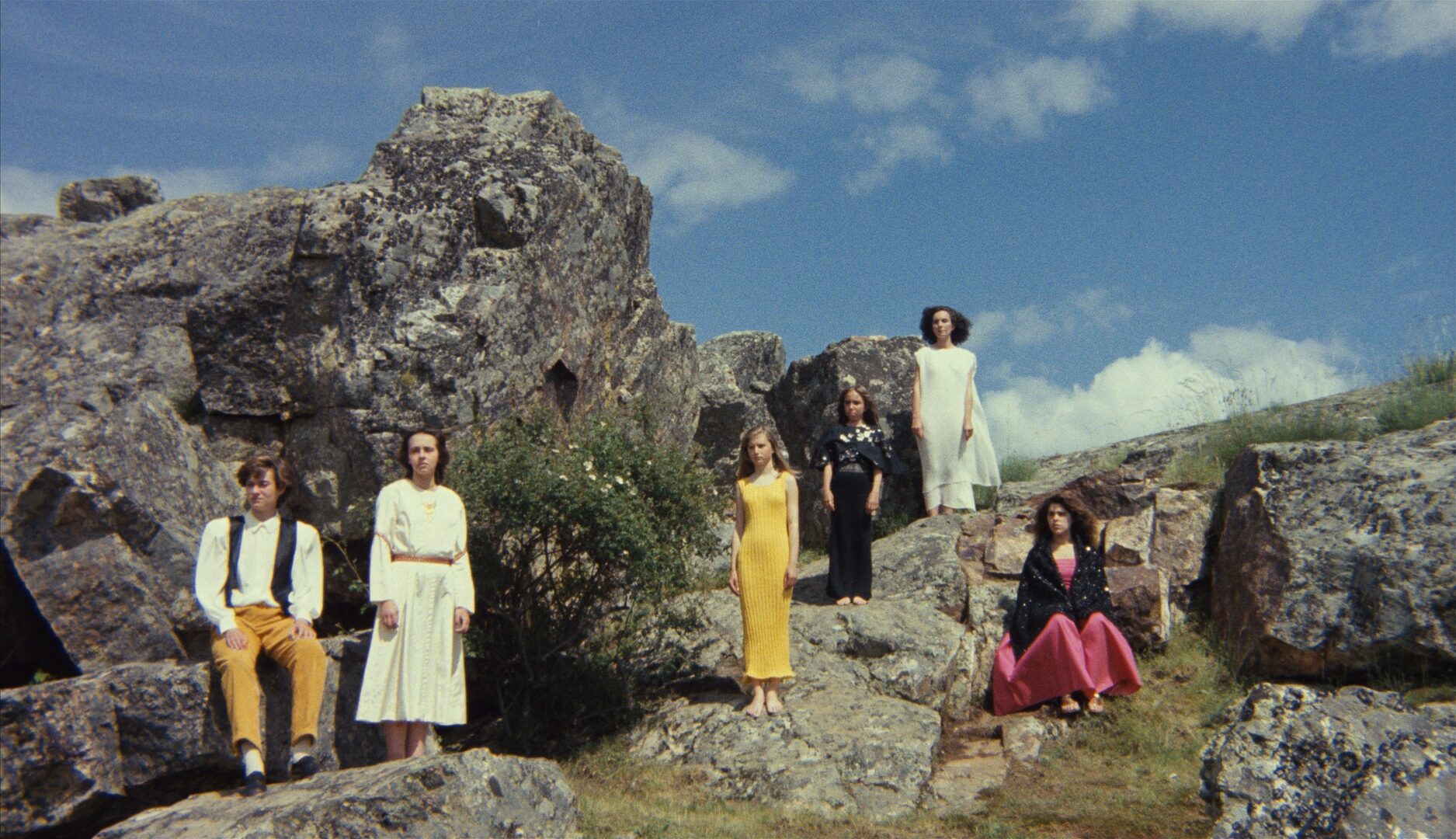
Rosa de Areia draws from a wide range of texts, from the Atharva Veda — one of the canonical books of Hinduism — to Michel de Montaigne’s essays and writings by Margarida Cordeiro herself. Within this vast web of sources, the film reflects on the human condition from ancient times to the present — a stratification of time symbolized by the desert rose, a geological formation shaped by the combined action of water, wind, and sand. In addition to these literary and philosophical influences, the film also arises directly from the physical reality of Trás-os-Montes. Drawing on what the filmmakers describe as the “practical imagination” of the region’s people, they work with materials and elements that echo their crafts and labors. Beginning with the material life of these communities, the film weaves a narrative that extends far beyond them, calling upon other actors and landscapes.
Digitisation
The new copy results from the 4K wet gate digitization of the original 35mm camera negative conserved by Cinemateca Portuguesa. Digital grading and image restoration were made by Cineric Portugal, using a distribution print as a reference and were validated by the film’s Director of Photography, Acácio de Almeida (2019). The digital restoration of the sound was made by Cinemateca from the original 35mm optical sound negative (2025).