
Original Title
Udju Azul di Yonta
Year
1992
Runtime (minutes)
98
Director
Flora Gomes
Synopsis
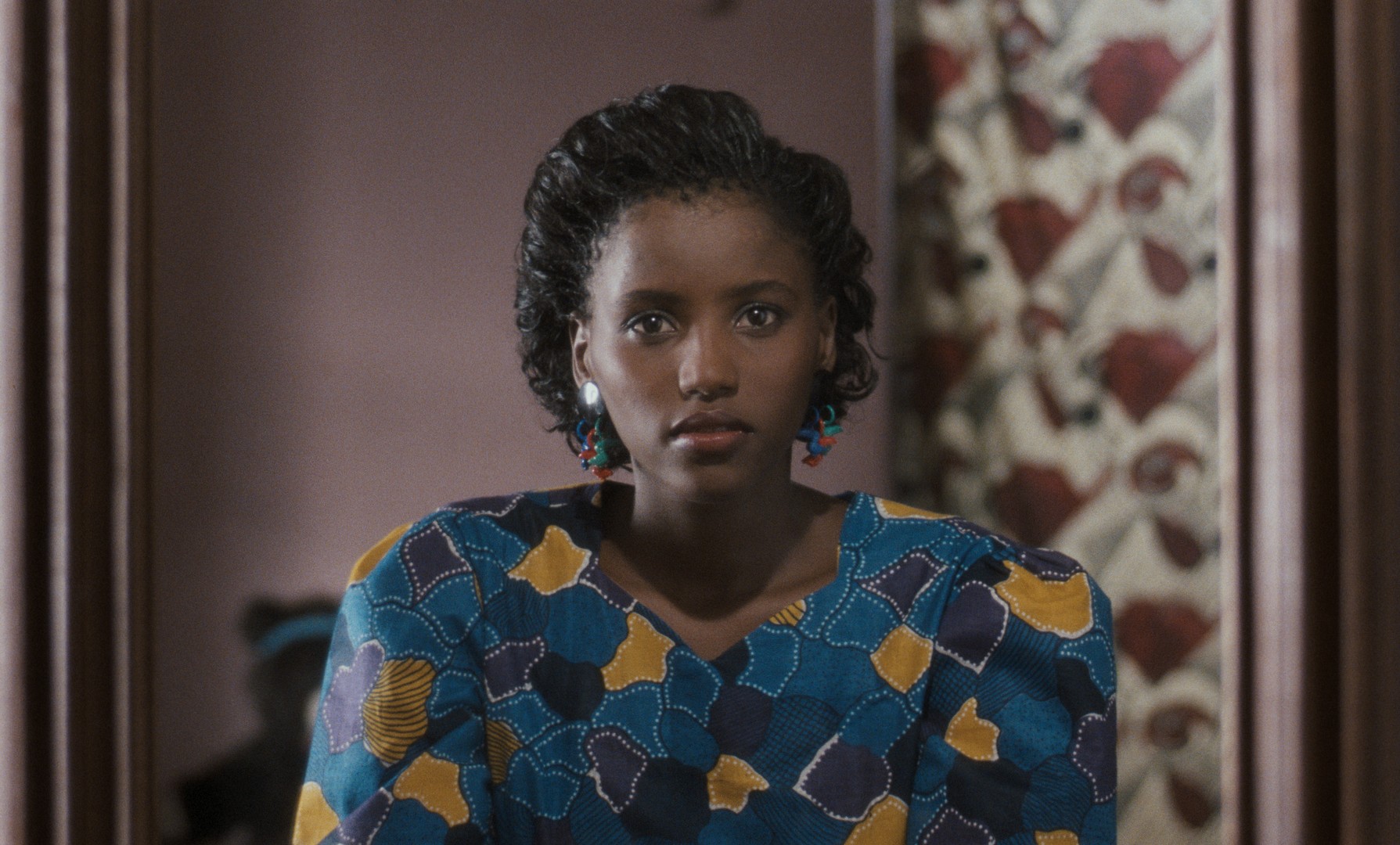
UDJU AZUL DI YONTA (1992), directed by Flora Gomes, is a landmark film about Africa’s contemporary history, post-colonial nation building and identity formation. With candor, gentle humor, and sensitivity, Gomes reflects on Guinea-Bissau nineteen years after independence, portraying a country moving from adolescence into adulthood.
The city itself becomes the leading character, its movements and colors setting the rhythm of the story. The freedom fighters who heroically reclaimed the right to self-determination after eleven years of struggle and now live in this new reality seem adrift. Their project of building a just society faces the pressures of capitalism and a Western political system that still interacts uneasily with deeply rooted traditions of communal solidarity. Meanwhile, the younger generation responds to independence with aspirations toward modernity, migration to Europe, and participation in global culture, including fashion and music.
Through a rich and multifaceted portrayal of Bissau, its inhabitants, and its culture, the film revolves around a central issue: five hundred years of conquest, slavery, and colonial domination have profoundly shaped self-perception and cannot simply be erased.
Yonta, a beautiful young woman much admired and the daughter of a former freedom fighter, and her brother Amílcar, named after the leader of the fight for independence—the extraordinary intellectual, agronomist, diplomat, and politician Amílcar Cabral—take part in this new struggle. While Amílcar and the other children embody the unwavering solidarity of African ethics, Yonta is in love with a former freedom fighter and courted by a young man shaped by incompatible European ideals—the blue eyes from a Swedish book that he copies out in an attempt to win her affection. The wedding of her best friend expresses the coexistence of two systems that still need to be integrated. Yonta dances energetically during the traditional ceremony, while the Westernized, Fellini-inspired reception at the film’s conclusion reveals how the dream of freedom can turn into an absurd illusion. Here Gomes dialogues with Fellini, who perhaps best captured how fantasies of grandeur turn into nightmares. Yet for Gomes, this is not the end of the story. Yonta, Amílcar, and their friends choose to dance to their own African rhythm around the sterile swimming pool.
Africa’s future is being built here, upon the vital energy of its youth in search of dreams worth defending—dreams that express its own culture and escape the imposed fantasies of blue eyes.
Digitisation
This copy is the result of a 4K scan of the original 35mm camera negative, preserved by the Cinemateca Portuguesa, carried out using liquid-gate immersion technology. The soundtrack was digitised from the original magnetic sound elements, also preserved by the Cinemateca. The scanning, digital restoration and color grading were undertaken in 2025 through a partnership between Cineric Portugal and Irmã Lúcia Efeitos Especiais. The digital sound restoration was carried out by Estúdio BillyBoom, using a distribution print as reference. Digitisation and restoration carried out by the Cinemateca Portuguesa – Museu do Cinema within the framework of Portugal’s Recovery and Resilience Plan (PRR), as part of the European Union’s NextGenerationEU programme.